This post may contain affiliate links.
4 years into our life on the farm, homestead or farmstead (or whatever you want to call it), and we’re seeing the first real signs of possible self-sufficiency. It’s taken a lot of experimentation in learning what we can grow here, where and when, but we’ve passed a few milestones, and right now we could eat just from our land. We choose not to, because I still buy nice things. I’ll tell you what’s easy for us to grow here, which vegetables are most successful and sustaining, and which we still buy.
Foods We Are Self-Sufficient In
The foods below are available to us year-round, and we’ve been fully self-sufficient in them for a few months now. We stopped shopping at the supermarket months ago but we do still buy a few items at local markets and from small businesses. I’ll talk about what we need to buy and which foods we grow ourselves, below.
Types of Food We Can Be Self-Sufficient in Easily
Carbohydrate Vegetables
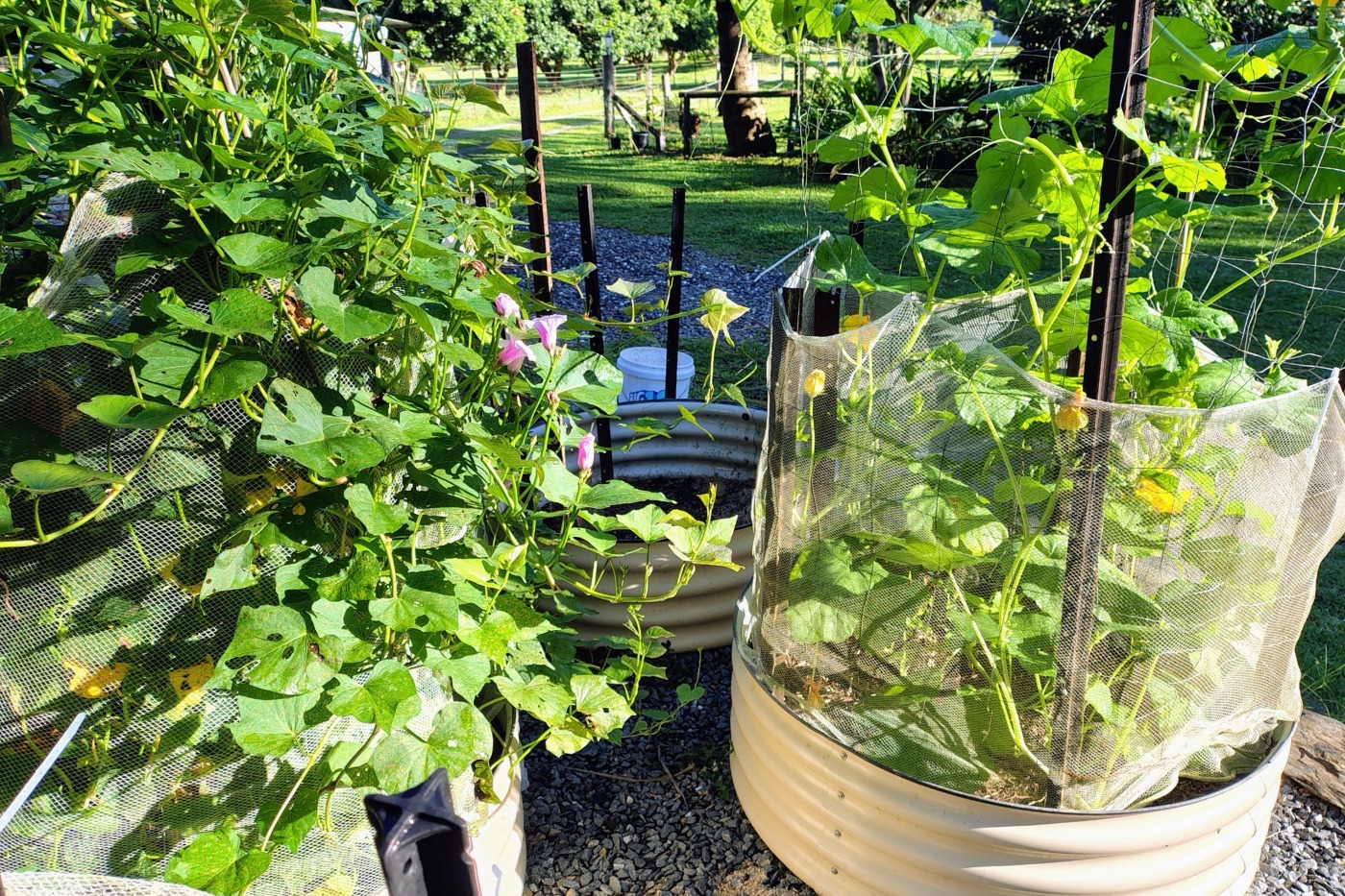
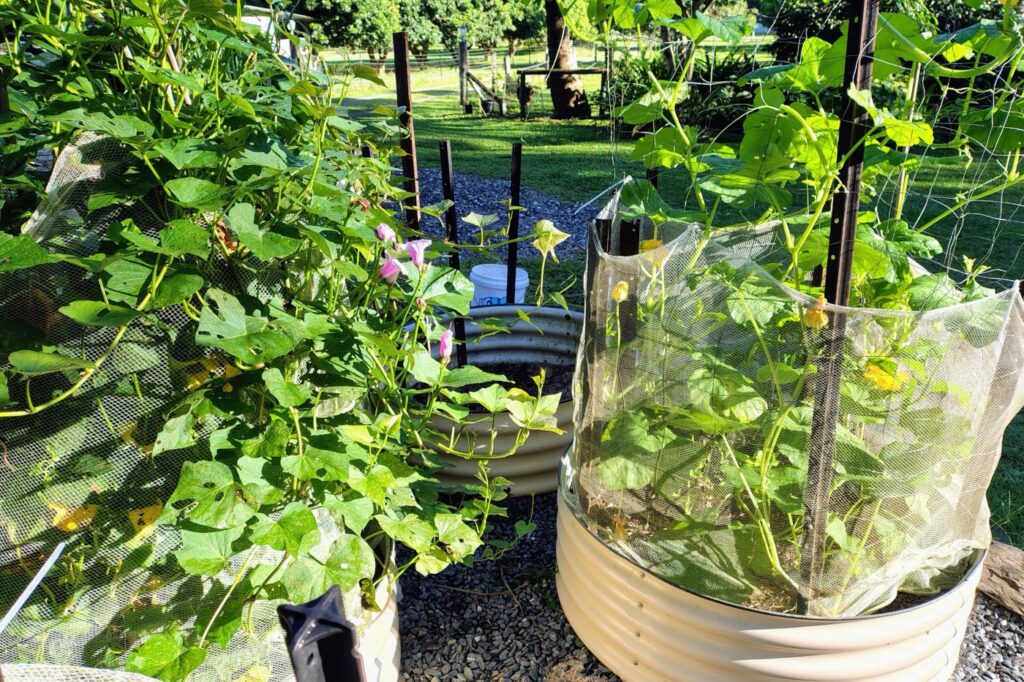
Sweet potatoes have been a life-changing self-sufficiency survival crop. I didn’t get into sweet potatoes at first because we like to eat very low carb. I’ve realised that this is fairly difficult if you want to eat only what you grow, as some of the easiest foods to grow in our wet tropical climate are carb crops.
I’ve gone from one raised bed of sweet potatoes to 2, to 3 in recent months. Currently 3 out of 9 raised beds in our self sufficient vegetable garden are filled with sweet ptatoes at various stages.
The beauty of sweet potatoes is that they are a dual-purpose crop; you can eat the leaves and the carbohydrate-heavy roots. They grow easily, year-round. I’m harvesting tubers them right now in February/ March, the wet season. There should be a lot more as we head into autumn and winter.
In our tropical climate, it doesn’t get cold enough for them to completely die back, but winter does knock them back a bit and stop production.
The other easiest to grow carbohydrate crop is pumpkins. I don’t really like pumpkin, but they’re huge and easy to grow. Pumpkin vines take up a lot of space of course, so we grow them in the ground in a large area, fenced off against our free range chickens, turkeys and geese. If a recipe calls for carrot for sweetness, I substitute pumpkin, we don’t grow carrots at the moment.
You may need to experiment with different pumpkin varieties to see which will grow for you and where, but our pumpkins and our sweet potatoes grew from store or market-bought scraps.
Leafy Greens
The easiest green leafy veg to grow for self-sufficiency is longevity spinach. It never stops producing, although it does slow down in winter. I’ll have a few bags frozen for that period. We can also grow kale and various lettuces.
I’ve grown kale through the wet season in pots on the deck, the lettuces are in the open in a raised bed and self-seed themselves constantly. I guess that’s the permaculture of an annual vegetable.
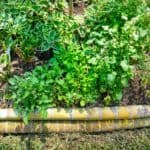
We have one whole raised bed of longevity spinach and that gives us greens almost every day for 4 people. We have a post on the best way to harvest it for maximum food production. All thoughts of companion planting in raised beds have gone out of my head. Having a whole bed dedicated to one food crop works best as you can tailor mulch, feed, manure and more to just that one plant.
Growing a fruit crop and a leaf crop in one raised bed makes zero sense to me, now, as the two need different fertilisers. Leaves need nitrogen, fruit and flowers need more P and K. Food plants in raised beds are heavy feeders, particularly in a tropical wet climate where nutrients are going to get leached out of the soil fast. They’ll need feeding with whatever you’ve got.
I think of a lot of green herbs as green leafy veg too. They’re more than just a garnish or flavouring and should be used more.
Other Vegetables That Grow Easily
We’re having huge success with cucumbers right now, growing them in the ground. I’ve grown cucumbers in pots, up trellis or supports, for years, and they’ve done OK but not great. It turns out they grow much better in the ground, on the ground. I’m constantly finding huge cucumbers lying on the wet mulch. They seem to be more hidden from pests below the canopy of leaves.
Cucumbers are the ultimate easy vegetable, you don’t have to cook them, you can throw them in a salad, sandwich or make refrigerator pickles. We really love cucumbers, and in the summer wet season they are thriving.
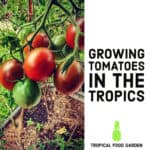
We are having a little success with tomatoes at the moment. I’ve grown multiple tomato types in the wet season (summer) previously, but this year the Thai pink egg tomatoes are doing great in pots. The same variety died in the ground. These plants came from seeds from tomatoes I bought at the local market. I grew multiple plants to try them in different locations to see what works. In the wet season, pots on the deck with some shade and no rain are winning.
Herbs and Spices
I still have a cupboard full of bought herbs and spices, but if the supply chain were cut off tomorrow, I have all that I need, growing easily.
Chillies grow like crazy, with just those, I can make fermented sauces and dried chilli flakes to get us through any period when the plants stop producing. Normally, there will be fresh red chillies, green chillies, orange and red habaneros and jalapenos growing somewhere. We love chillies, and they are perennials here. The original seeds for our red chillies came from a single supermarket chilli, and we’ve been growing them for years.
The spice that we grow most easily is turmeric. It’s a weed, it’s everywhere. We can have turmeric year-round if I dry or freeze some at the end of summer.
Herbs that we grow easily include Asian coriander, which I substitute for real coriander in Indian, Vietnamese, or Thai dishes. It tastes pretty similar. regular coriander (cilantro in the US), which grows here, but goes to seed quickly, so we have coriander seeds, the spice, plus fresh green coriander sometimes.
Rosemary grows well in a pot, and I will try it in a raised bed with good drainage at some point.
Parsley, both flat-leaved and curly-leaved, seems to be fairly perennial. I will report back on this, but I’m growing both, side by side, to see how they shake out. We love a parsley sauce with the fish my husband catches, and it’s full of nutrients.
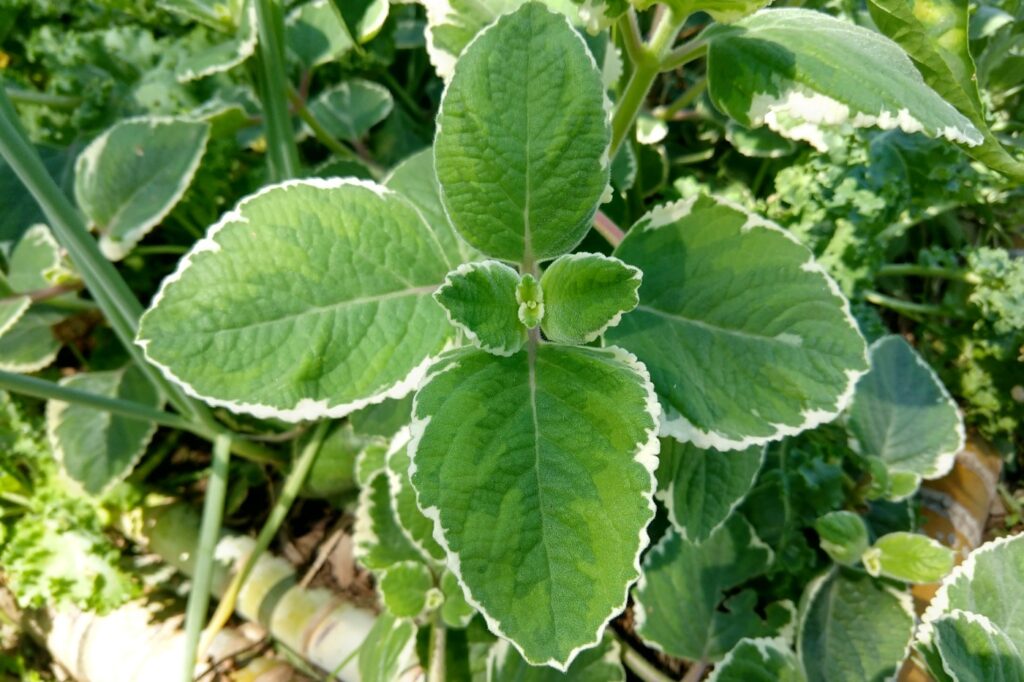
Oregano, regular Greek oregano or similar, only grows in the warmer months for me, but Cuban Oregano (mother of herbs) is perennial and prolific. The poultry don’t touch this plant, and it’s very ornamental, so I grow it everywhere.
The star of the show is garlic chives. They are perennial, prolific, will seemingly grow anywhere, and I can substitute them for garlic or onions if I don’t have those two. We currently don’t grow garlic or onions but we have grown leeks.
Self Sufficient in Fruit
In late February we picked our first lemon of the year, we should have abundant lemons from February through to about November. After the lemons the grapefruit and mandarins will be ready. We are 100% self-sufficient in citrus fruit, and I freeze juice or whole lemons for those few months when there are none.
Sometimes I’ll make Moroccan preserved lemons, just salt plus lemons. They’re good.
We also have bananas, papayas, mulberries, star fruit, Atherton raspberries, limes, pineapples, and more. I never buy fruit unless I treat the kids to an apple crumble. Of course, their favourite fruit dessert involves the one fruit that I can’t grow.
We eat fruit when it’s available. I wouldn’t dream of buying a banana, but several times per year we have more bananas than we can eat.
Fully Self-Sufficient in Eggs
You’re not fully self-sufficient in eggs unless you’re growing your chickens’ food and raising your own chicks. We do both, but we do add a little grain for luring all of the birds into the coops. I’d rather not buy grain at all, so I’m working on growing pigeon peas for them. They also get excess papayas, pumpkins and meat or fish scraps. Hens hatch chicks sometimes, and sometimes we use the incubator. This is just one of the ways that we don’t conform to the big American YouTubers’ homestead methods.
The hens are moulting right now so we’ve gone from over a dozen eggs per day at peak season to only 2. I preserved eggs when there was a glut, we won’t be buying eggs ever again, hopefully. As we enter early March, the laying is picking up today. Honestly, I’d rather go without eggs than buy them at crazy prices from unloved hens.
Food Essentials We Cannot Be Self-Sufficient In
Here’s a list of basic foods that we still have to buy and may never be self-sufficient in.
- Good quality sea salt or rock salt. I keep a stash, because life without salt would be unthinkable.
- Pepper, but we do have a vine and should be growing our own pepper soon.
- Flour. Organic. I have no plans to grow wheat, and I like to bake bread, cakes, and quiches. Also, we need aluminium free baking powder and bicarb.
- Butter, olive oil and coconut oil. We could make coconut oil if we had to.
- Milk, because I don’t choose to milk the goats. I could.
- Yoghurt, because I like to make tzatziki with all those cucumbers. I could make my own, but one person just can’t do everything.
Our shopping list is pretty short these days and the more food we grow the more money we save. Of course, we do buy luxuries like cheeses, olives, and occasional tinned tomatoes (because tomatoes are just tricky here), beans, lentils, and more. Raw honey is a treat from a local beekeeper, but I buy sugar for cakes. We buy some meat and fish, although we could be fully self-sufficient in animal protein if we had to be. These days I’m feeling the urge to be vegetarian again, I don’t like taking the lives of our animals. The food bills are becoming shorter and shorter. I do buy yeast because I can’t keep a sourdough starter alive. I could if I had to. We buy chocolate at the market from a local grower. I drink coffee and tea. We grow coffee, but it’s so labour-intensive that I could never grow enough.
So really, it’s a matter of picking your battles. Choose which things are most effective and easiest for you to be self-sufficient in. Also, think about your community being self-sufficient, rather than individuals being fully self-sufficient independently. So if, like us, you have a local honey producer, you don’t need to take onthe job of keeping bees. And so it goes. As selling our produce and bartering produce is illegal here, it’s difficult to set up a local food economy, but we give food away freely and hope the trend will catch on. Are you self sufficient in anything? If so, well done.