What growing in the tropical garden in March? What jobs need doing in March, what seeds can we sew in March and what are we harvesting to eat in March? Tropical food garden notes for March in the tropics of the Southern Hemisphere, near the equator. Food plants that grow in the tropics in March.
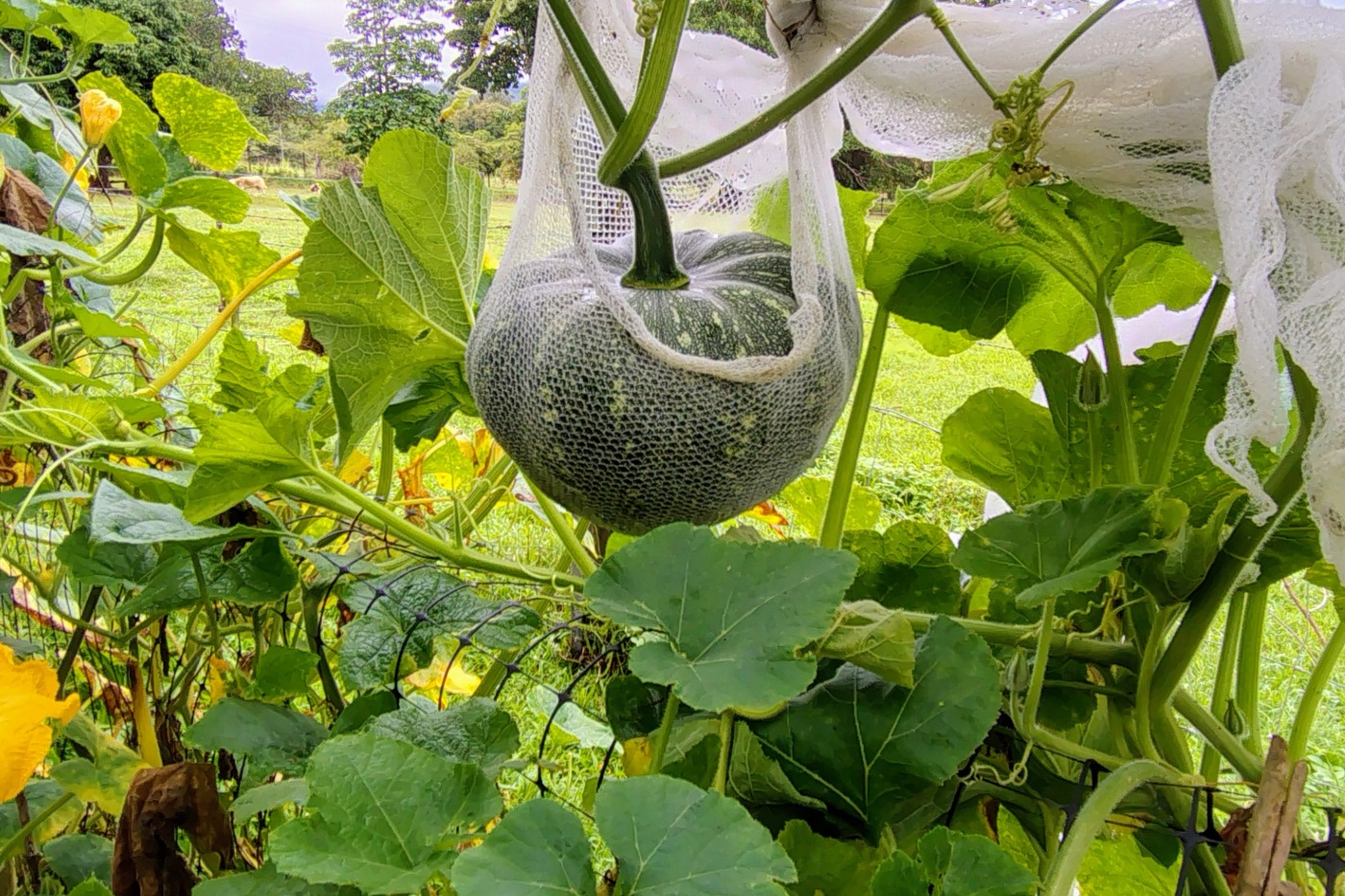
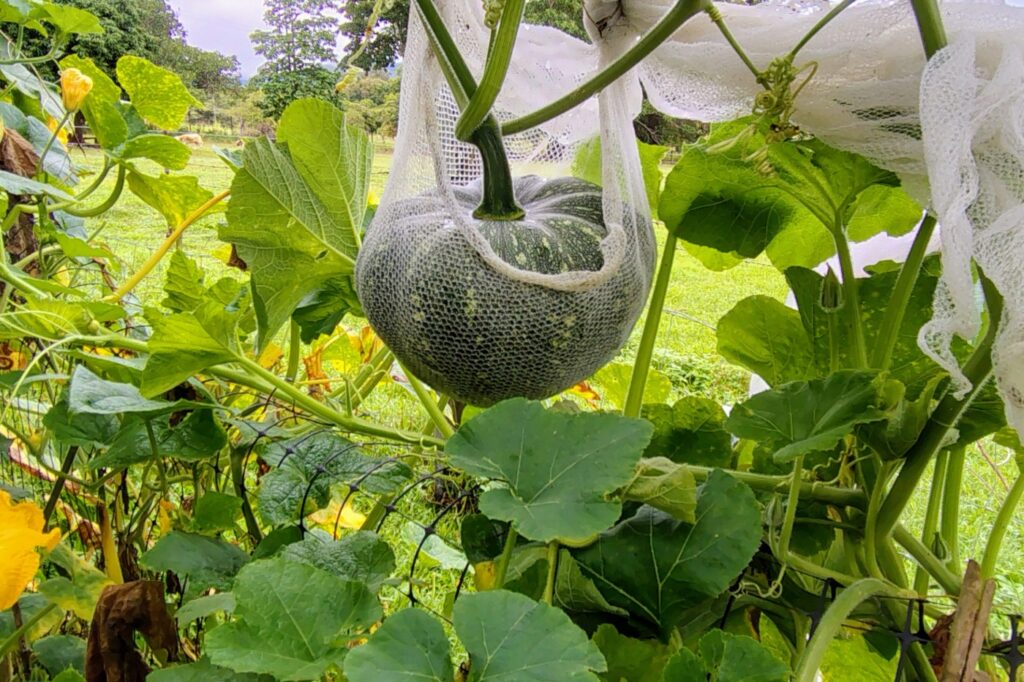
March in the garden, we have started harvesting pumpkins and more are forming, this year, I’m growing them vertically to save space, using pumpkin hammocks.
Tropical Garden in March
Our tropical garden is in Queensland Australia (Far North Queensland or FNQ to be precise) near Cairns and Port Douglas. But on the Tablelands, where we’re a bit cooler than on the Australian coast.
For many years, we gardened at sea level in tropical Queensland, being at elevation now (near Julatten, Mt Malloy, Mareeba etc.) does change growing conditions. This site is a bit of a combination of growing on the coast and at cooler elevations, but everyone’s microclimate and aspect is different.
March is officially the first month of autumn in Australia, the wet season is calming down and temperatures are dropping. The start of the month can still be very wet, but we should be through the worst.
Things To Do in The Garden in March
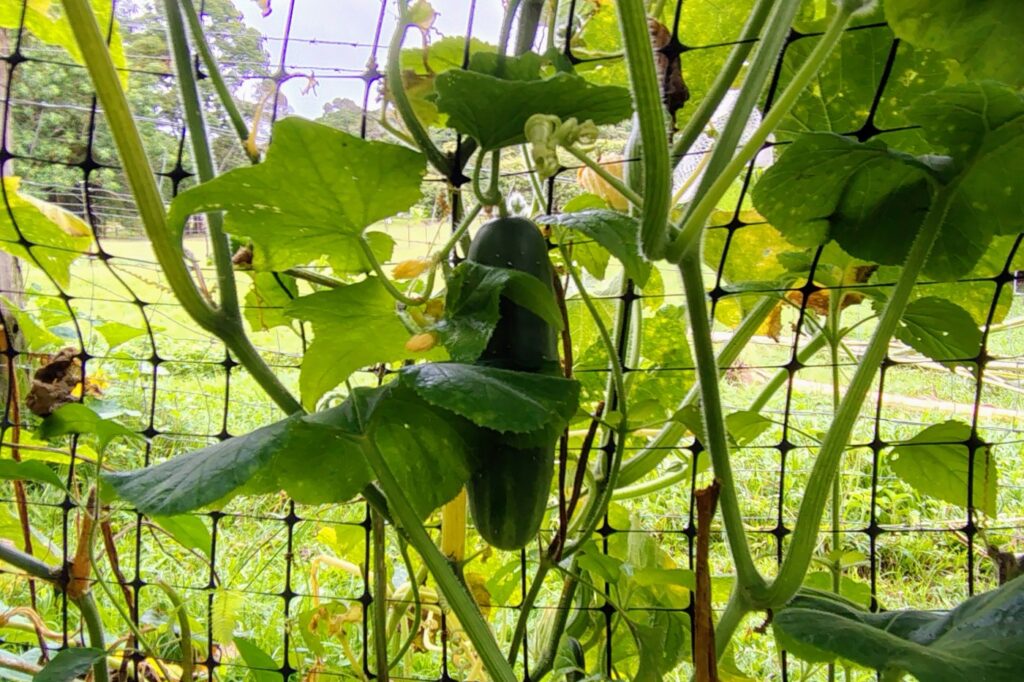
These cucumber vines have been producing all year, right through the wet season. I’ve had loads of cucumbers throughout March, and I’m starting more seeds now. It may get too cold for them as winter approaches, but we’ll see.
For me, March seems like a good time to get working in the garden. There will be plenty of wet-season weeds and growth to pull or chop and drop for mulch and soil improvement.
After the wet season, many nutrients will be leached from the soil, and plants will be growing. I’ll be adding compost or well-rotted manure, but if the rains are still very heavy, this feels pointless. The wet season can also affect soil pH, it’s worth keeping an eye on this (get a soil pH meter) if you have fussy plants.
Planting and Sewing Seeds in March (Tropical)
I’ve read elsewhere that March is a time for preparing beds and that most planting should wait until April in a tropical setting. That way the worst of the rains should be over and temperatures will be cooling down.
I’m not one to follow rules, so I sew a lot of vegetable seeds and start new plants from cuttings in March.
This March, I’m sewing more rocket (arugula) and a Japanese radish similar to Daikon radish. We like fermented daikon but I couldn’t find daikon seeds, so that’s a new one for us this year.
I’m also starting winter veg like cabbages, starting more kale (which grows right through the summer months on our deck, out of the rain) and trying for more cucumbers. Our cucumbers produced well right through February and March and hopefully this will continue for a while yet.
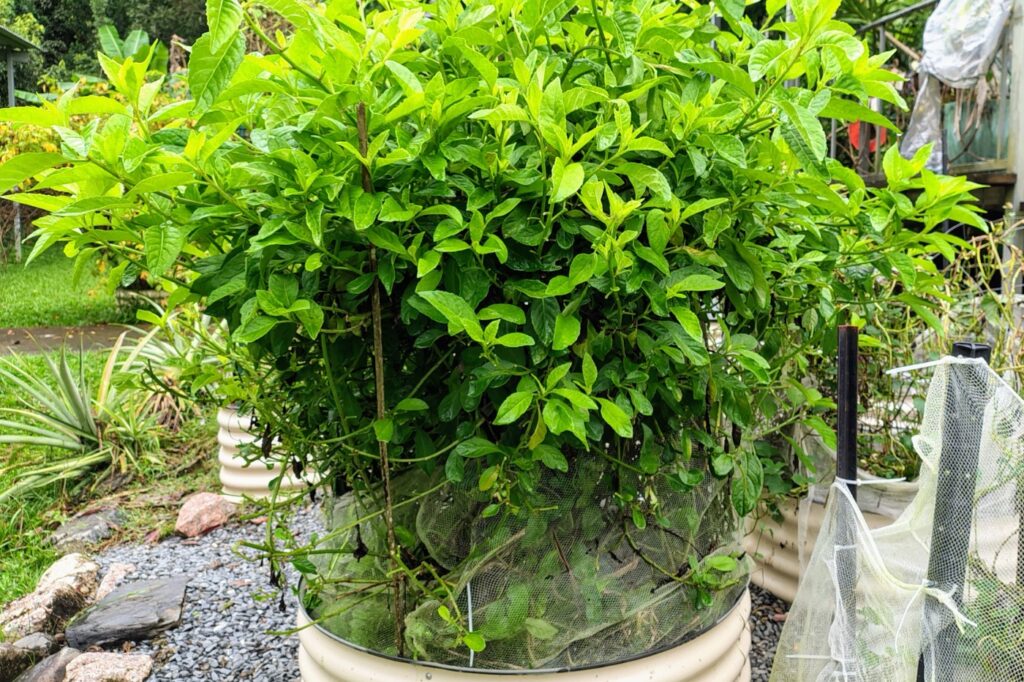
Longevity spinach, a perennial leafy green, is a standout food crop in our tropical food garden. This is an excellent way to grow it, with some support, in a raised bed. Raised beds are generally not great for perennials, but this plant doesn’t mind if we top up with manure, burying parts of it. It will just grow more roots and continue to thrive. It will slow down in winter, but not die back.
Food plants we can harvest and are growing (or not growing) in our tropical garden in March.
Peppers and Chillies
We have all kinds of hot peppers in production and ready to harvest in March. Thai birds’ eye chillies (perennial and easy), long thin supermarket-style red and green chillies (probably cayenne), plus varieties of habanero. All are fruiting in March but they have slowed down.
There are plenty of chillies available to pick in March, but not nearly as many as in early to mid-summer. But the chillies grow as perennials, and there are almost always some available to use in the garden.
We also have plenty of chillies pickled, fermented, and turned into hot sauce, so if we need chillies we always have some. We haven’t bought a green chilli or red chilli in years. I picked a lot of red chillies in January (summer) and preserved them, but we picked loads in June (early winter), Sept, October (sping), they go all year, pretty much, as perennials, depending on the variety.
We do have sweet peppers in the ground this March, they are barely producing though. The photo above of these yellow sweet peppers is from March last year. We don’t have much luck with large peppers (capsicums) because of fruit fly. Picking them green helps, once they start to go red the bugs find them.
Passion Fruit
We are still harvesting passion fruit in March, they’re looking like they’ll never stop! We have both yellow and purple/red passionfruit vines.
We only have 2-3 months of the year where we’re not able to pick fresh passionfruit from our tropical (Southern Hemisphere) garden. Our biggest passion fruit pest is the cockatoos.
The guavas were falling from the trees in March and the lemons were just starting to be ripe.
Tropical Herbs Growing in March
All of our tropical herbs seem to be going well right now. The Cuban or Indian oregano (mother of herbs) is growing strongly in the heat and the wet, as it always does. As we head into cooler weather it will stop growing so prolifically.
The garlic chives are growing well in March, too. We have a loss to report, our regular, European style chives died over the wet season this year. We were able to grow regular chives all year, outside, in the tropics, although they never flourished. Garlic chives do much better in our tropical climate and give us more food.
All of the basils are growing well in March. This includes Thai basil, lemon basil, European sweet basil and tulsi. They love the hot weather and wet conditions so much so that we’re cutting huge bushes back hard in March.
We have both curly and flat leaved parley growing side by side in the same pot. Both have grown well right through the wet season and we have plenty in March. These are out in the rain and sun, not under cover. I’d say that flat leaf parsley grown slightly better in our climate.
The lemongrass clumps are growing strongly in March and need cutting back or dividing and lifting again.
Mint is growing strongly in March in the ground and in pots.
Asian coriander (saw tooth coriander) is thriving and setting seed. These plants self-seed prolifically and have previously died back for me in winter (the dry season). I’ll watch to see if this plant does too.
Rosemary and thyme, woody European herbs, are the only two that I have zero success with growing in the wet tropics. Everything I’ve tried, I just can’t grow these two herbs in a tropical environment. Luckily, these two herbs are the best to buy dried as they don’t lose their flavour.
Citrus Fruit in March
The first of the lemons are ripe, as are the kumquats. We’ll be picking lemons and preserving them for months to come. Our frozen lemons from last year just ran out, so the new season’s harvest is very welcome.
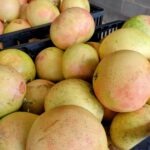
The grapefruit, being bigger, will take longer to ripen. It’s important that the citrus continues to get enough water in these final days of ripening for big juicy fruit.
Bananas in March
We have maybe a dozen unripe bunches of bananas in March. Bananas seem to produce at just about any time of year. We had a few bunches in the wet season, too.
Other Tropical Fruits in March
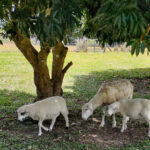
The star fruit are starting to be ready in March. They taste terrible, we feed them to the goats. Guavas were ripe throughout March, but they’re over now. Pinapples are forming but we usually have ripe pinapples in December, this is unusual.. The papaya died off in the wet. The leaves became tiny, and the fruit went to the bats. I’ve cut it right back. It may survive, maybe not. We often have established papayas die in very wet weather. I have new ones that I started from seed. The strawberries also died in the wet. Raspberries are just starting to form, they will fruit through winter.
Eggplants/Aubergines
We currently have no eggplants or aubergines in production in the garden, other than a few Thai aubergines (small, round, green eggplants),
Most of our aubergine (eggplant) plants that were mature and fruiting last year died off in the wet and had pest problems. We’ve pulled them out ready for new plantings.
We do have some young eggplant (aubergine) plants started from seed late last year. Hopefully, they’ll start fruiting soon.
Growing Tomatoes in March
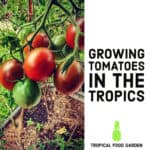
I have had a few tomatoes right through the wet season and some are looking pretty good right now, in March.
We’ve had a lot of problems with nematodes and/or bacterial wilt in tomato plants, but these Roma plants seem pretty easy to grow. The Roma tomatoes are a good variety for cooking, and they’ve always grown well for me in the tropics.
I propagate the romas from cuttings; I haven’t grown them from seed in years. So technically, these roma plants are at least 5 years old, they’re perennial tomatoes. This year we’ll try growing more varieties in pots with sterile soil.
Failing with tomatoes since moving to this new farm or property has been really annoying, we had no difficulties with tomatoes in our old backyard. It just goes to show how much things can vary from one spot to another. That’s another reason to throw the rule book out of the window.
The tiny spooner tomatoes that grow wild here are growing like crazy, but they’re so tiny that nobody wants to harvest them or eat them.
Pumpkins
We always have pumpkins, year-round. In the wet season (summer) pumpkin vines grow prolifically, setting flowers and fruit. There are dozens of huge orange-fleshed pumpkins ripe and ripening, in our tropical garden right now.
Pumpkins really are the easiest food plant to grow in the tropics, giving you Kg of carbohydrate-filled fruit. Yes, a pumpkin is a fruit. They grow prolifically and spread to cover huge areas. This year I’m growing them over a frame to save space. I have to make hammocks for the pumpkins or they will snap the vine. You can save a lot of money by growing staple crops like pumpkins to eat year-round.
To grow pumpkins you need good rich soil. If pumpkin plants aren’t growing for you, your problem could be your bought, bagged, compost, it’s often not very good. Add more nutrients using home-made fertilisers, well rotted manure, or bought supplements, and your pumpkins should take off. Don’t forget to mulch them.
Mulberries
Our mulberries usually fruit in August (winter). In March they are looking sad and have dropped most of their leaves. March is not a good time of year for mulberry bushes or trees.
Raspberries
We grow native raspberries or Atherton raspberries. These set fruit through autumn and winter. They are producing a few fruit now in March, we can pick a small handfull almost daily, but it’s not what I would call a harvest.
The raspberry plants are growing really strongly in March, contained, as they are invasive and spiky. I wouldn’t want them getting out of hand.
What time to cut back these native raspberries, I don’t know as yet. Can you tell me?
Ginger, Galangal and Turmeric in March
Ginger, turmeric and galangal are all from the same family, and all produce a lot of leaf (and those edible rhizomes) in the summer and wet season. In March the leaves are big and healthy.
If I needed ginger or turmeric I could harvest some now, but it’s best to leave it a little later.
These plants love the tropics and are very easy to grow and to preserve. You can freeze them, dry them, ferment or make pickles. They’re a powerful medicinal garden plant, too.
Beans in March
We have been harvesting bush beans (French beans) daily since before Christmas. I know I had plenty of beans for our Christmas lunch and the same few plants have been giving us food through January, February and into March. I don’t know how long they will last, but I think we can have bush beans all year here.
I’m getting more bean seeds in the ground in March.
We didn’t grow snake beans this year, as they’re not as good to eat as bush beans and climbing beans take more work.
Kale and Brassicas
I have some very healthy young kale plants (cavolo negro) right now and we’re eating kale leaves. I have them in the ground, in the rain and sun and in more protected pots with more shade. Both are looking pretty good in March.
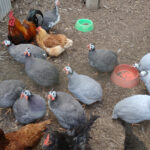
Any bug damaged leaves we feed to our chicks and guinea fowl keets. Yes, chickens can eat kale. They love kale. We have ducklings due to hatch soon too, maybe, although duck breeding season has gone now and the ducks stopped laying towards the end of summer and the wet.
Longevity Spinach – A Perennial Leafy Green
This really is a star survival food. We can and do eat fresh green leaves every day from one raised bed of longevity spinach. It’s thriving in March and right through the wet. As it gets coolesr in winter it will slow down, but not die back. I may freeze a few bags now as insurance. See the photo above for how to grow it in a really good way. Don’t leave it sprawing all over the ground, grow it up.
Lettuce and Salad Greens
We have rocket to eat now, in March, mizuna, and one variety of lettuce that self-seeds everywhere. I don’t think I’m supposed to be growing and eating lettuce in March, but I am. Best tip for new gardeners – ignore the rules!
We seem to have found a lettuce variety that will grow all year in the tropics and cope with the wet season. I have no idea what variety it is, I’ll check.
Rocket (arugula) will grow all year in the tropics. It will bolt (go to seed) in summer if you don’t give it some shade.
March Garden
I keep these notes to help me in my garden. If I know year on year what I can plant when, and which plants we can eat when, I have a better idea for next year to keep our food supply abundant all year. If we’re aiming for self-sufficiency on the farm, that’s important. We don’t want to rely on supermarkets and we stay prepared for global shortages or shutdowns. If you have tips or ideas to share, please leave them in the comments.
We use cookies on our website to give you the most relevant experience by remembering your preferences and repeat visits. By clicking “Accept”, you consent to the use of cookies.
This website uses cookies to improve your experience while you navigate through the website. Out of these, the cookies that are categorized as necessary are stored on your browser as they are essential for the working of basic functionalities of the website. We also use third-party cookies that help us analyze and understand how you use this website. These cookies will be stored in your browser only with your consent. You also have the option to opt-out of these cookies. But opting out of some of these cookies may affect your browsing experience.
Necessary cookies are absolutely essential for the website to function properly. These cookies ensure basic functionalities and security features of the website, anonymously.
Cookie
Duration
Description
cookielawinfo-checkbox-analytics
11 months
This cookie is set by GDPR Cookie Consent plugin. The cookie is used to store the user consent for the cookies in the category "Analytics".
cookielawinfo-checkbox-functional
11 months
The cookie is set by GDPR cookie consent to record the user consent for the cookies in the category "Functional".
cookielawinfo-checkbox-necessary
11 months
This cookie is set by GDPR Cookie Consent plugin. The cookies is used to store the user consent for the cookies in the category "Necessary".
cookielawinfo-checkbox-others
11 months
This cookie is set by GDPR Cookie Consent plugin. The cookie is used to store the user consent for the cookies in the category "Other.
cookielawinfo-checkbox-performance
11 months
This cookie is set by GDPR Cookie Consent plugin. The cookie is used to store the user consent for the cookies in the category "Performance".
viewed_cookie_policy
11 months
The cookie is set by the GDPR Cookie Consent plugin and is used to store whether or not user has consented to the use of cookies. It does not store any personal data.
Functional cookies help to perform certain functionalities like sharing the content of the website on social media platforms, collect feedbacks, and other third-party features.
Performance cookies are used to understand and analyze the key performance indexes of the website which helps in delivering a better user experience for the visitors.
Analytical cookies are used to understand how visitors interact with the website. These cookies help provide information on metrics the number of visitors, bounce rate, traffic source, etc.
Advertisement cookies are used to provide visitors with relevant ads and marketing campaigns. These cookies track visitors across websites and collect information to provide customized ads.